All Categories
Featured
Essential Questions For Maryland Solar Panel Installation...
When You Engage A Washington DC Solar System Installation...

How Delaware Solar Panel Installation Companies Help You Reduce Costs On Energy
Table of Contents
- – A Professional Review Of Delaware Solar Panel I...
- – Methods The 30% Federal Tax Credit Affects You...
- – Comparing Delaware Solar Panel Installation Co...
- – How You Can Approach Delaware Solar Panel Inst...
- – Everything You Should Learn About Battery Stor...
- – How You Can Effectively Navigate HOA Bylaws An...
A Professional Review Of Delaware Solar Panel Installation Companies
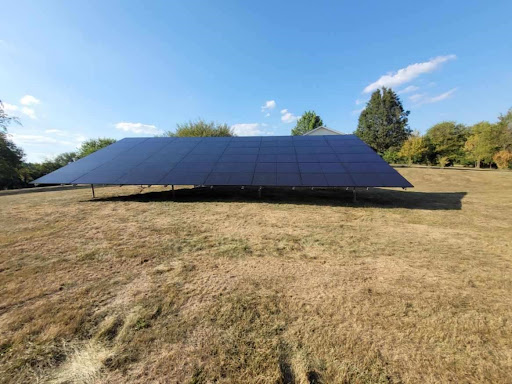
Evaluating the diverse Delaware Solar Panel Installation Companies requires a thoughtful balance between initial expenses and long-range utility savings. With a standard 13.69 kW system ranging from $29,720 to $40,210 before incentives, you must evaluate the initial system cost against the benefits of the 30% tax rebate and potential income from a SREC Token. Because your return timeline totals 8.4 years, selecting the right vendor is a pivotal choice that influences both your current budget and your future energy independence. By evaluating Delaware-based solar panel installation services through the lens of financing options and technical certifications, you can decide which approach matches your specific roof suitability and household energy needs. This guide provides the objective framework you need to identify the professional contractor best suited to manage your permitting, interconnection, and continuous system performance.
“Each individual state, county, and neighborhood may have its own permitting requirements when conducting home improvement projects.” — Lumina Solar
Methods The 30% Federal Tax Credit Affects Your Overall Solar Panel Installation Budget
The 30% federal incentive constitutes a foundational financial offset that reduces your total system cost by utilizing a direct credit against your personal income tax liability. When you examine Delaware-based solar panel installation services, you will discover that integrating this credit with local utility-specific incentives significantly decreases the net expenditure required to own a residential array.
“The federal Investment Tax Credit allows eligible homeowners to deduct 30% of the total system cost from their federal taxes.” — youtube.com
Beyond federal support, you can obtain various state-level and utility-specific financial mechanisms to improve the economic sustainability of your project. These offsets operate through different structures, ranging from upfront cash reductions to ongoing revenue streams produced by the performance of your equipment.
| Incentive Type | Mechanism | Expected Benefit |
|---|---|---|
| Utility Rebate | Upfront reduction | $0.50 to $0.70 per watt |
| Net Metering | Monthly bill credit | Value of excess electricity delivered to grid |
| Performance Income | Recurring payment | 1 SREC Token for 1 MWh generated |
Utility rebates vary substantially depending on your service territory, with some providers offering $0.70 per watt for systems under 50 kW, capped at $6,000, while others offer $0.50 per watt for the first 5 kW of capacity. Additionally, grid buyback permits you to balance your electricity consumption by storing credits for excess generation, while Solar Renewable Energy Certificate income provides a secondary, performance-based revenue stream for every megawatt-hour your system produces.
Compare the specific rebate caps offered by your local utility provider against your projected system size to determine which incentive structure offers the most favorable impact on your total expenditure.
When selecting between Delaware Solar Panel Installation Companies, you must consider the immediate investment amount—ranging from $12,767 for a 5 kW system to $29,720 for a 13.69 kW system—against long-term financial benefits like the 30% federal tax credit, utility credit program, and revenue from every SREC Token earned. You should thoroughly assess each potential contractor by their solar certification, roof solar compatibility, and ability to navigate local solar HOA rules, as these factors directly impact your overall payback period, which typically spans 8.4 years. To discover the best fit for your home, you should contact solar panels Delaware to examine Delaware-based solar panel installation services, comparing financing options like a PPA versus a direct purchase while weighing whether the inclusion of energy storage or participation in DE SHINES corresponds with your household consumption goals before asking for a complimentary estimate.
Comparing Delaware Solar Panel Installation Contractors: What You Need To Know
Delaware solar panel installation companies reviewed and compared focuses on the technical credentials of the staff and the firm's history with regional regulatory standards. Assessing an vendor effectively requires looking beyond the initial price tag to ensure that the personnel on your roof possess the necessary training to handle complex electrical interconnections safely and effectively.
“While not mandatory by the state, obtaining a NABCEP PV Installation Professional certification demonstrates your expertise and is preferred for contractors seeking rebates offered by the Delaware Sustainable Energy Utility (DESU).” — lumberfi.com
Emphasizing professional standards helps reduce risks associated with substandard installation quality or future maintenance hurdles. The following table highlights the key standards you should use to evaluate the technical competency of any potential partner:
| Evaluation Criterion | Why It Matters |
|---|---|
| NABCEP Certification | Confirms that the lead technician has passed thorough industry-standard assessment. |
| Local Permitting History | Ensures the company understands precise municipal construction codes and zoning laws. |
| Utility Interconnection Experience | Decreases delays in obtaining approval to connect your system to the grid. |
When you order a free assessment, do not wait to ask for detailed documentation regarding these qualifications. An provider who operates with transparency regarding their technical background is generally better equipped to navigate the intricacies of local utility requirements and system integration. Confirm that the individuals executing the actual solar deployment on your property are directly hired or supervised by staff who hold these professional credentials.
Ask each candidate to provide a list of three recent, local installations so you can confirm their familiarity with your specific local permitting office.
How You Can Approach Delaware Solar Panel Installation Companies As A Lower-Income Resident
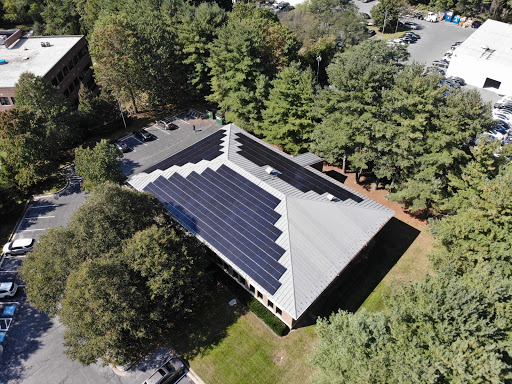
Low-income access to solar energy is facilitated through focused grant programs and the Delaware Solar Assistance Program initiative, which aim to lower or remove the financial obstacles for eligible households and non-profit organizations. These resources are expressly designed to bridge the gap between initial investment amount and the long-term savings potential of residential solar, guaranteeing that the benefits of renewable energy are not limited to those with significant upfront capital.
“As part of the new program, the agencies will provide grants and low-cost financing for residential and community solar energy projects in disadvantaged areas of Ohio, ultimately lowering electricity bills in low- to moderate-income households.” — solarpowerworldonline.com
When you start researching who are the solar panel installers working in Delaware, it is important to identify those versed in navigating these specific grant-funded projects. These technicians must be familiar with the paperwork and compliance requirements associated with state-supported assistance programs. The subsequent table details the primary pathways for reducing your financial burden when selecting an installation partner:
| Pathway | Primary Benefit | Target Audience |
|---|---|---|
| Delaware SHINES | System and battery storage integration | Low-to-moderate income households |
| State-level Grant Programs | Direct upfront cost reduction | Qualified homeowners and nonprofits |
| Utility-specific Rebates | Per-watt installation offset | General residential solar adopters |
Beyond state initiatives, many contractors offer advice on how to layer these grants with the 30% federal tax credit to maximize the total reduction in investment amount. Because these programs often have restricted funding windows or specific eligibility thresholds regarding household income and property attributes, you should proactively verify your status before finalizing a contract with any installer.
Reach your local energy office or a certified installer to verify your current eligibility for state-funded grant levels before signing a purchase agreement.
Everything You Should Learn About Battery Storage And Delaware Solar Panel Installation.
Storage unit is an optional component for Delaware-based solar panel installation services that allows you to store surplus electricity generated during the day for use during evening hours or grid outages. While your solar fitting functions flawlessly well by transmitting surplus power back to the grid, adding a battery changes how you control your energy independence and reliability.
“Identify utility meter, inverter and/or associated generation and storage (battery) equipment.” — firstenergycorp.com
When deciding whether to integrate storage, consider the following compromises between standard grid-tied systems and those equipped with battery backups:
| Feature | Grid-Tied System | Battery-Backed System |
|---|---|---|
| Power Security | No power during outages | Maintains essential circuits |
| Initial Expense | Lower upfront system cost | Higher upfront investment |
| Energy Usage | Exports all excess power | Accumulates power for night use |
| Complexity | Simplified installation | Requires advanced integration |
Numerous regional initiatives now provide incentives that bundle home battery system with solar equipment to offset the added hardware expenses. By retaining your own generation, you reduce your reliance on the utility grid, though this also increases the total price tag beyond the standard $29,720 to $40,210 range associated with a 13.69 kW array. Before concluding your contract, verify if your chosen installer has documented experience with local grid interconnection standards for hybrid battery-inverter configurations, as these require specific safety authorizations to operate in parallel with the local electrical infrastructure.
Review the exact technical requirements for your preferred battery model to verify it is compatible with the inverter suggested in your main solar quote.
How You Can Effectively Navigate HOA Bylaws And Permit Applications For Your Delaware Solar Panel Installation Company
Navigating HOA and permit requirements when Finding a solar panel installation company in Delaware involves balancing local regulatory compliance with the specific aesthetic or structural standards of your residential community. Before any equipment is installed, your chosen contractor must secure necessary building permits from the local municipality and get formal utility interconnection authorization to ensure the system safely integrates with the regional power grid.
“Notwithstanding division (A) of this section, an owners association may establish reasonable restrictions concerning the size, place, and manner of placement of solar energy collection devices.” — law.justia.com
If you live within a community governed by a homeowners association, you may face additional levels of oversight that can influence your project’s ultimate design. While some associations are neutral, others maintain rigorous standards regarding the visibility, placement, and physical appearance of solar arrays. It is crucial to understand how these local policies intersect with your technical needs:
- Building Permits: Verify that your solar company handles all construction and electrical code submissions to the local building department.
- Utility Interconnection: Ensure the documentation for grid access is filed properly to allow for grid buyback credits.
- HOA Review: Submit your installation’s site plan early to detect potential restrictions on panel color, wiring concealment, or roof positioning.
- Design Adjustments: Be prepared to negotiate potential changes to panel layout if your association prohibits visible hardware from the street-facing elevation.
Coordinate immediately with your homeowners association board to secure written approval of the site plan before signing a conclusive contract for your PV installation.

Table of Contents
- – A Professional Review Of Delaware Solar Panel I...
- – Methods The 30% Federal Tax Credit Affects You...
- – Comparing Delaware Solar Panel Installation Co...
- – How You Can Approach Delaware Solar Panel Inst...
- – Everything You Should Learn About Battery Stor...
- – How You Can Effectively Navigate HOA Bylaws An...
Latest Posts
Essential Questions For Maryland Solar Panel Installation Companies
When You Engage A Washington DC Solar System Installation Company In The City
A Handbook To Employing Trusted Virginia Solar Panel Installation Companies
More
Latest Posts
Essential Questions For Maryland Solar Panel Installation Companies
When You Engage A Washington DC Solar System Installation Company In The City
A Handbook To Employing Trusted Virginia Solar Panel Installation Companies